
Fabrication Materials
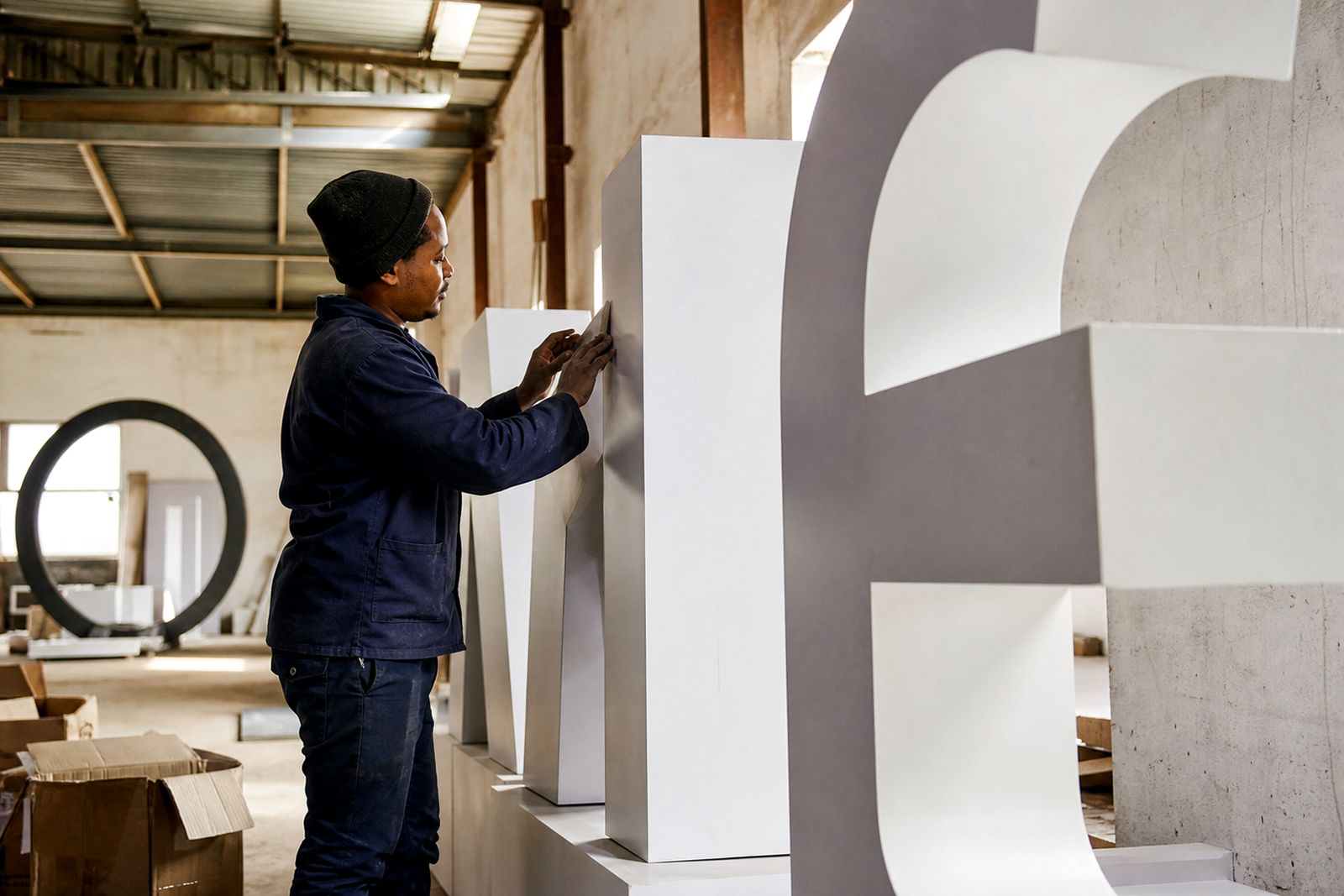
When sourcing shifts affect venue branding
Changes in sourcing can mean new suppliers, discontinued lines, or different routes for materials, hardware and finishes. These shifts may require adjustments to the fabrication process, such as sourcing alternative acrylics, metals, or fixings to maintain consistency in appearance and durability across large letters and venue branding.
Acrylic colours can drop off the market, aluminium may not arrive as expected, or regular fixings might not be available from usual suppliers. Naming the material, the amount needed, and any part that has become tough to get helps keep finishes looking the same, guides choices for structure, and means any replacements will fit the letters or branding already at the venue.
Identifying the piece or finish already in use helps prevent mismatches across repeat event elements. Listing the hardware, paint code, laminate reference or lighting component already installed makes it easier to replace a face, rebuild a damaged return or extend signage across several areas of the same venue.
Material changes worth flagging
A solid sourcing brief should specify what is changing in the fabrication chain and how it affects the build. Include details like board thickness, powder-coat options, vinyl brand swaps, weld requirements, or alternative fastening methods for freestanding letters.
Supply issues, finish mismatches, hardware changes or transport damage should be clearly described for each affected item. Face material, return depth, coating and mounting method need to suit the venue's requirements before considering other sources. Material changes are flagged under three headings:
- Backup sources for acrylic, metal, or timber
- Quantities identified where supply is low or unavailable
- Hardware or finish changes listed in plain terms
Typical material swaps in signage builds
Different venues in a build run may require changes to the material specification. Branding in a shopping mall may require materials or fire documentation approved by the centre's management.
Event timelines in South Africa do not always match the arrival of imported sheet material. Powder-coat colours, lighting parts and router-ready board sizes can all change how a build is fabricated. Flag weight limits, tight access or suspended elements at the start so any alternative source can be checked against the actual build method.
Material sourcing details
Material needs, amounts, production timing and any current supply problems belong in the project brief. Sharing these details early helps keep the build on track and makes it more likely that finishes and structure will suit the venue, even if something has to be swapped out.
Naming the material or component, the quantity needed and the fabrication date helps keep records clear. Any known supply issue, the finish reference and the need to match existing large letters, signage or branded structures at the venue should also be included. Where substitutions can work, set clear limits so the full event set stays visually consistent.
Also worth a look
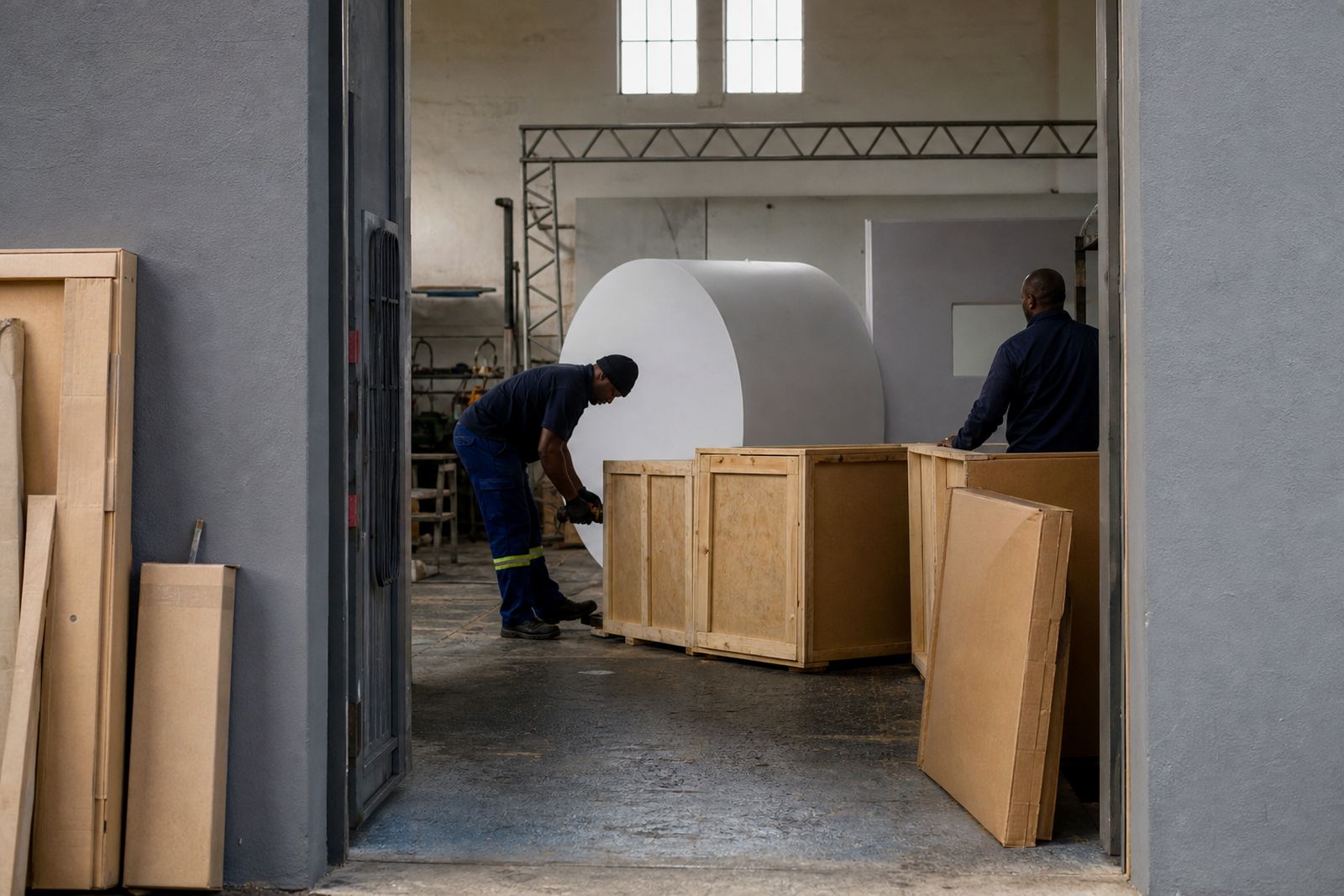

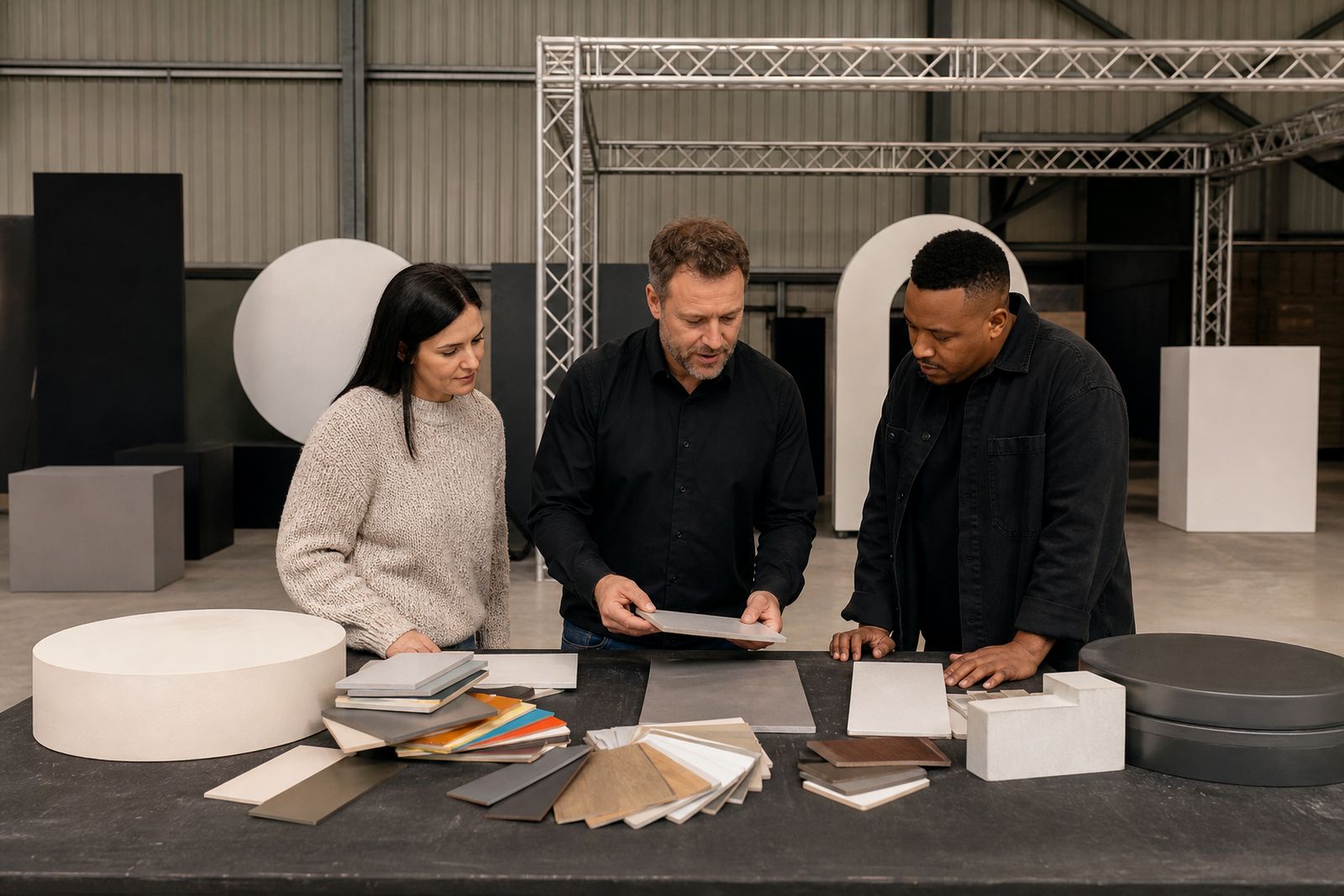
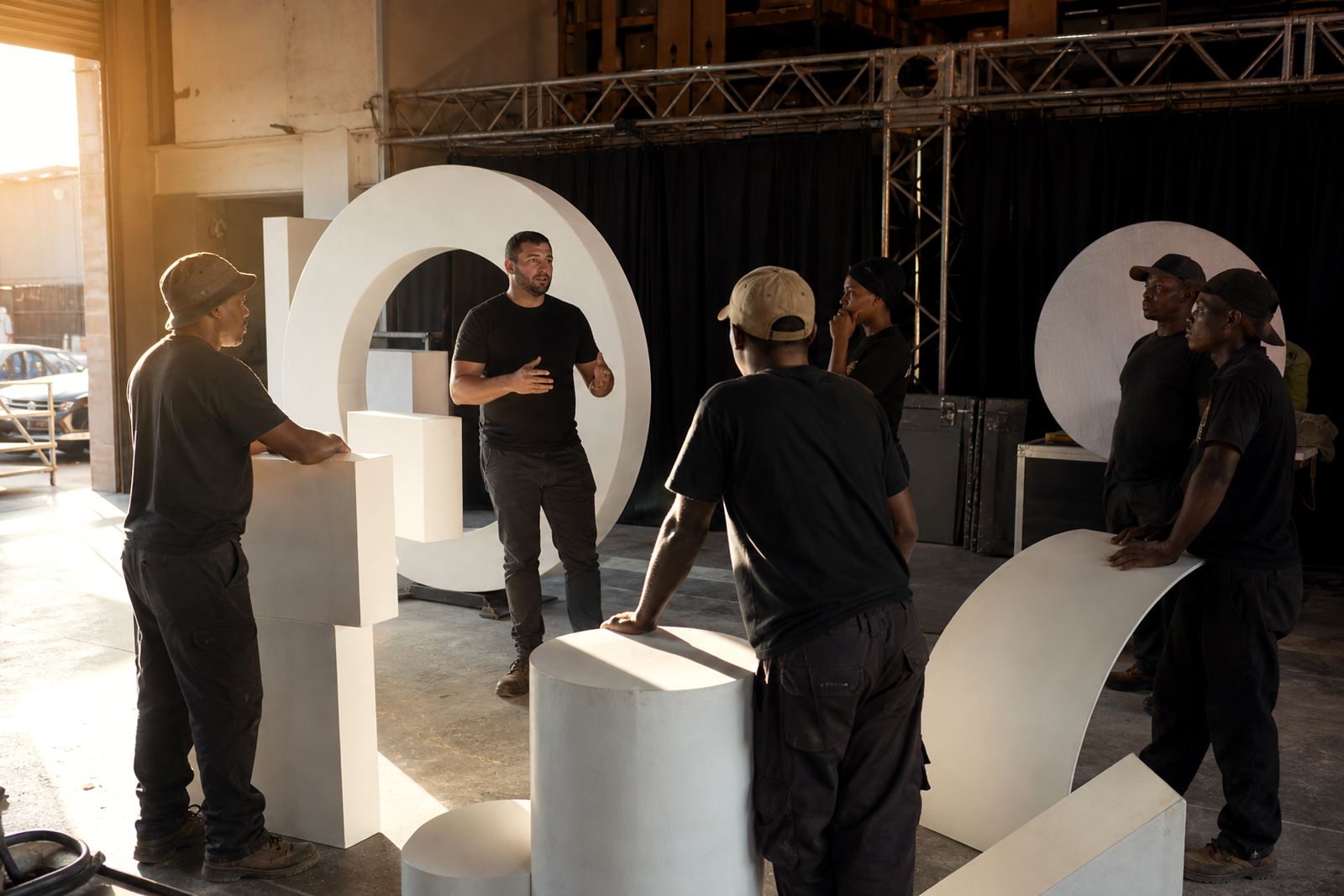
Tell us about your venue and wording
Send the wording, the venue and the date, and we will come back with practical letter options, materials and an install plan.
Start your brief