

Export Week specs
Travelling sets are packed, labelled and counted so they move between venues in crates.
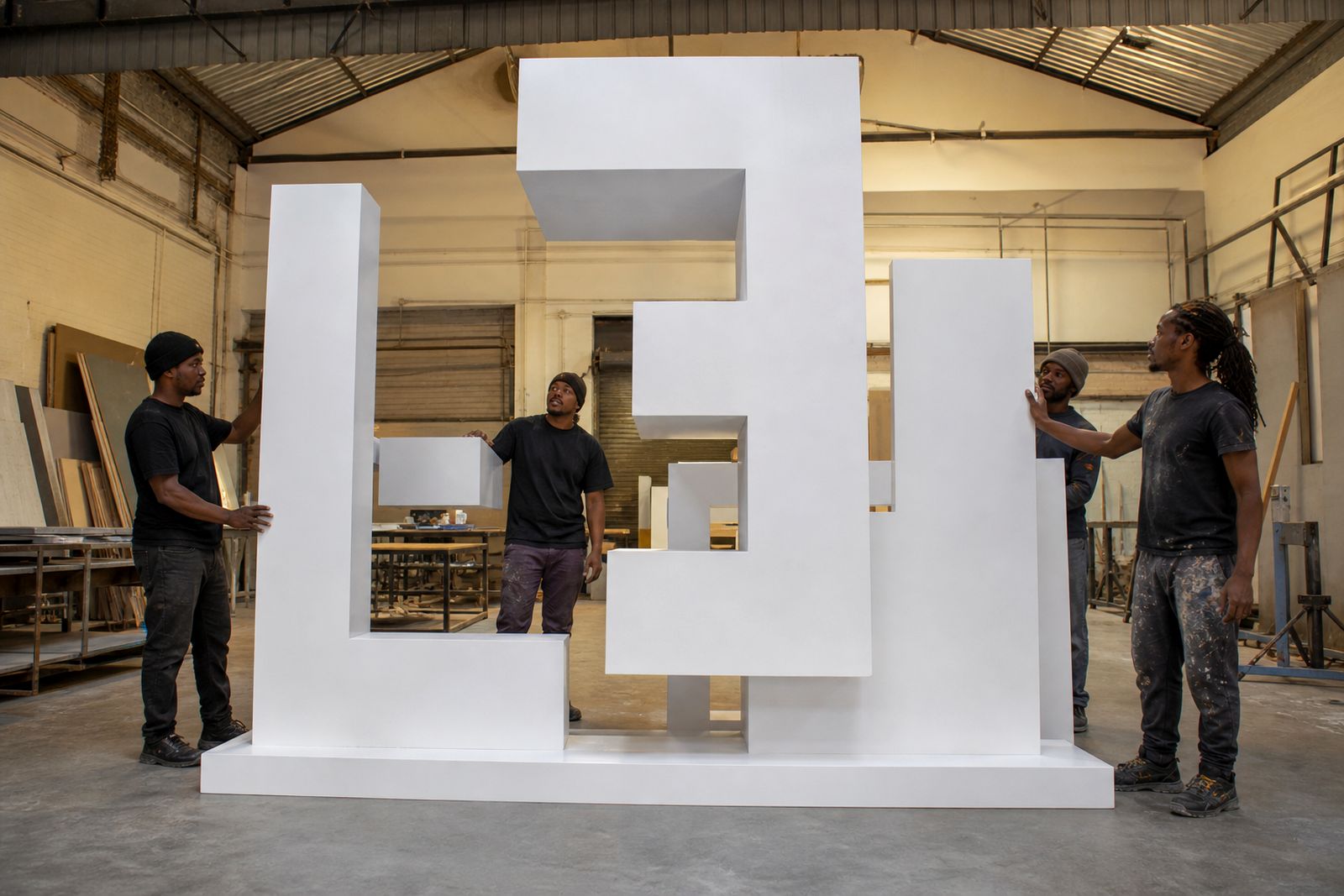
Crate-ready dimensions and handling points
Materials are selected for durability during repeated packing and unpacking, and each branding element is checked for a secure fit within its crate to prevent shifting or damage in transit.
Packed size, break-down points, and included hardware for each letter set are specified for easy movement between venues. Crate footprint, stacked height, and markings on faces, bases, and joiners help with reassembly. Each set must leave the workshop labelled, counted, and ready for repeat loading.
Freight depots, expo back-of-house areas, and venue storage between activations present opportunities for mix-ups, so matching labels across crate exteriors, internal components, and install references helps prevent confusion as sets move from place to place.
What gets recorded before dispatch
Campaigns that move branding more than once rely on accurate records of overall letter height, longest packed section, crate count, and any fragile faces or lighting parts that need separate protection. Note which pieces require two-person lifts, which bases travel loose, and which finishes should not sit against rough timber or dirty wrap.
Install plans that clearly show front faces, rear access points, and fixing packs help crews avoid opening every case. Before freight leaves, check finish condition, count all brackets and bolts, and confirm that the destination details on the labels match the current movement plan. Each dispatch record shows the following details:
- Packed sizes for each fabricated element
- Component labels matched to crate numbers
- Handling notes for repeat venue moves
Freight conditions that affect fabricated branding
Export sets often pass through OR Tambo cargo handling, temporary storage, and venue loading bays before installation starts. That is why we specify edge protection, face wrapping, and how smaller fittings are bagged and counted per letter.
Test records and cable identification supplied with illuminated signage help with checks once power is available at that site. For export jobs, these documents are packed with the set so that technical teams at each venue can verify connections and lighting order without delay.
Checks before the set leaves South Africa
Confirm measurements against the final fabricated pieces, not only the drawing. The dispatch file should include crate count, marked-up component list, and the destination use name for the event set. Clear identification on every part saves time during unpacking and return packing.
What our Sign Lettering customers say
Verified Google reviews
Tell us about your venue and wording
Send the wording, the venue and the date, and we will come back with practical letter options, materials and an install plan.
Start your brief